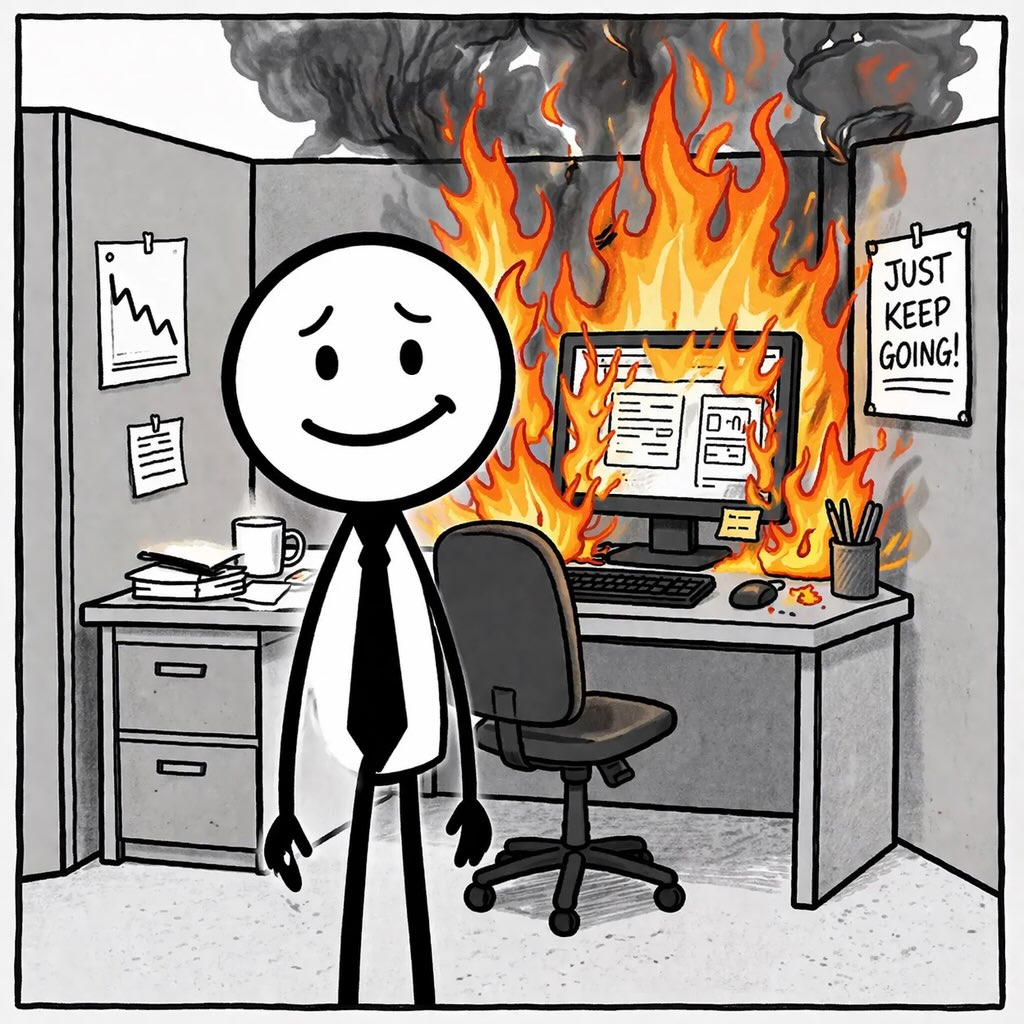
Published cartoon ·
Lead Technical Apologist
Keeping the explanation running because replacement was not funded.
Why this one bites
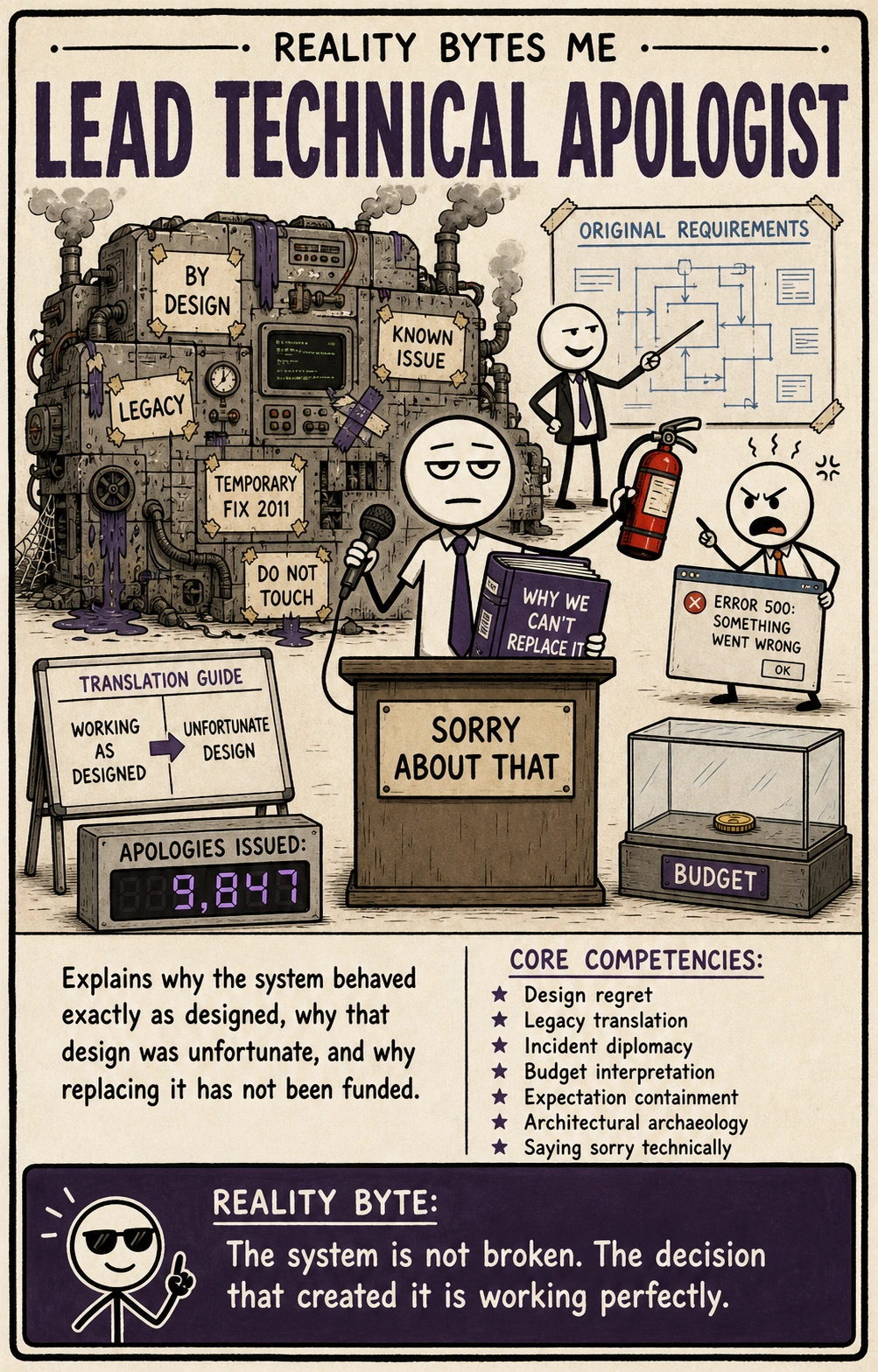
The apologist stands between a smoking legacy system, its original requirements and an angry user. The system behaves as designed; explaining why that is unfortunate has become a permanent role. Even the temporary fix has acquired a date old enough to make the label questionable.
The cartoon makes apology an operating expense of an unfunded decision. Technical staff must repeatedly translate the same failure into acceptable language while the conditions that cause it remain in place. The display case containing the tiny budget gives the repair proposal its likely answer.
Accessible summary
- An employee at a podium marked Sorry About That holds a microphone, a fire extinguisher and a book explaining why the system cannot be replaced. The machine bears labels including By Design, Legacy and Temporary Fix 2011.
- A user displays an error message, an apology counter climbs and a nearly empty budget sits in a glass case. The closing joke locates the problem in the decision that produced the system.
Reading notes
An apology can acknowledge a user's frustration without pretending the failure is acceptable. The role becomes absurd when apology is the only response the organization continues to fund. The employee is expected to sound accountable for a system they cannot replace, a budget they cannot expand and requirements they did not choose. Empathy becomes the adjustable part of an otherwise fixed decision.
The old temporary fix makes the history visible. Temporary measures are often reasonable during an incident. They become permanent when the immediate pressure disappears before the underlying repair is approved. Each later incident then looks like another operational problem instead of another consequence of the same postponed investment. The person at the podium inherits a recurring explanation for a decision that has quietly outlived its justification.
The nearly empty budget connects the apology to authority. If management chooses to keep the system, that choice should include its known support cost and limitations. Otherwise the organization presents the cost as the technical team's inability to stop apologizing. The cartoon asks whether the next conversation will improve the explanation or change the conditions that make the explanation necessary. Only one of those outcomes reduces the number on the apology counter.