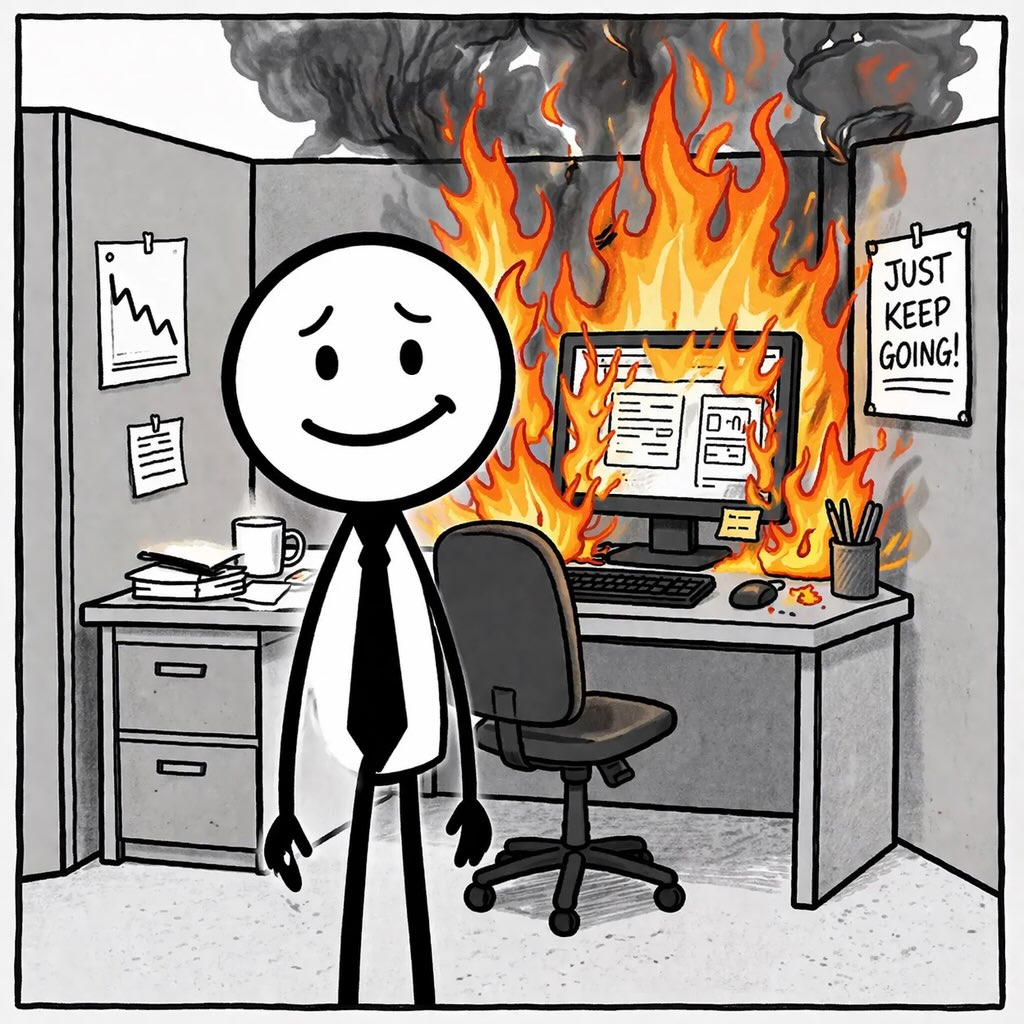
Published cartoon ·
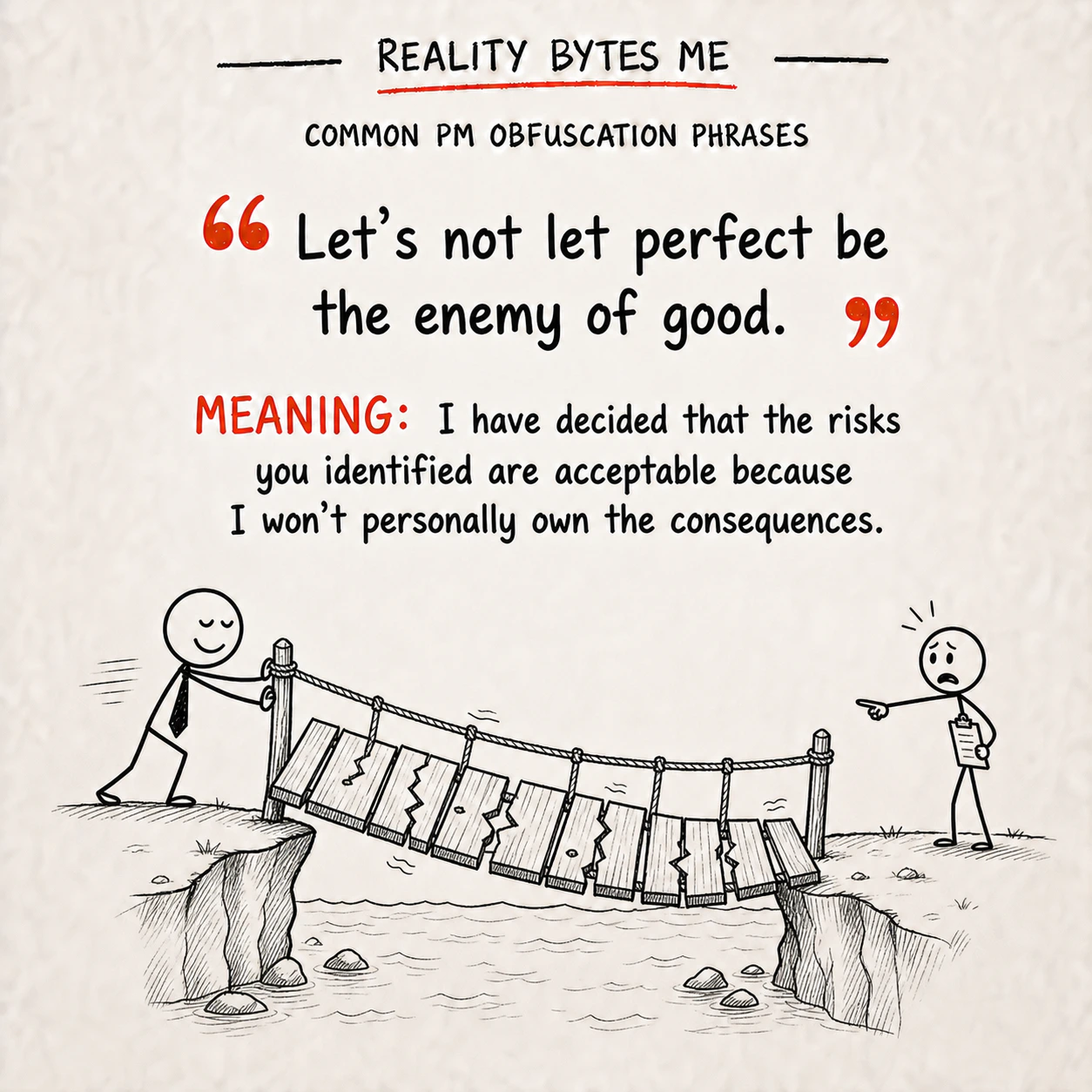
Let’s not let perfect be the enemy of good
The person accepting the risk will not be crossing the bridge.
Why this one bites
A familiar argument for pragmatism is delivered beside a visibly damaged bridge. The employee points out the danger while the manager appears satisfied. The dispute is about who bears the consequences of deciding that the condition is good enough.
The cracked boards distinguish a meaningful defect from cosmetic perfectionism. The cartoon satirises a convenient use of reasonable advice: dismiss the warning as excessive caution, then leave the person who raised it to deal with the failure.
Accessible summary
- A smiling manager stands at one end of a rope bridge with cracked wooden planks. An alarmed employee holding a clipboard points from the opposite bank.
- The caption says the identified risks are acceptable because the speaker will not personally own the consequences.
Reading notes
The phrase can help a team stop polishing something that already does its job. It becomes dangerous when every objection is placed in the same category as polish. A cosmetic inconsistency, a recoverable inconvenience and a failure that harms a user are not interchangeable. The bridge places that distinction in front of the reader: the condition being questioned affects whether the crossing works at all.
Deciding that a risk is acceptable requires someone to understand it and have authority to accept its consequences. The person who detects the defect does not automatically own that decision. Nor does an encouraging slogan document what was accepted. A useful discussion identifies the failure, its likely impact, the available mitigation and the person choosing to proceed. Without those specifics, pragmatism can become a way of obtaining agreement without acknowledging the trade-off.
The two banks also matter. The manager and employee are looking at the same bridge from different positions. If one person gains from opening it and another must repair it after a failure, their definitions of good enough may diverge. The cartoon does not demand a perfect bridge. It asks who is entitled to call the visible crack an unnecessary concern, and who will still be standing there when the verdict is tested.