Published cartoon ·
The Seagull
Workplace satire from RealityBytesMe.
Scene and commentary
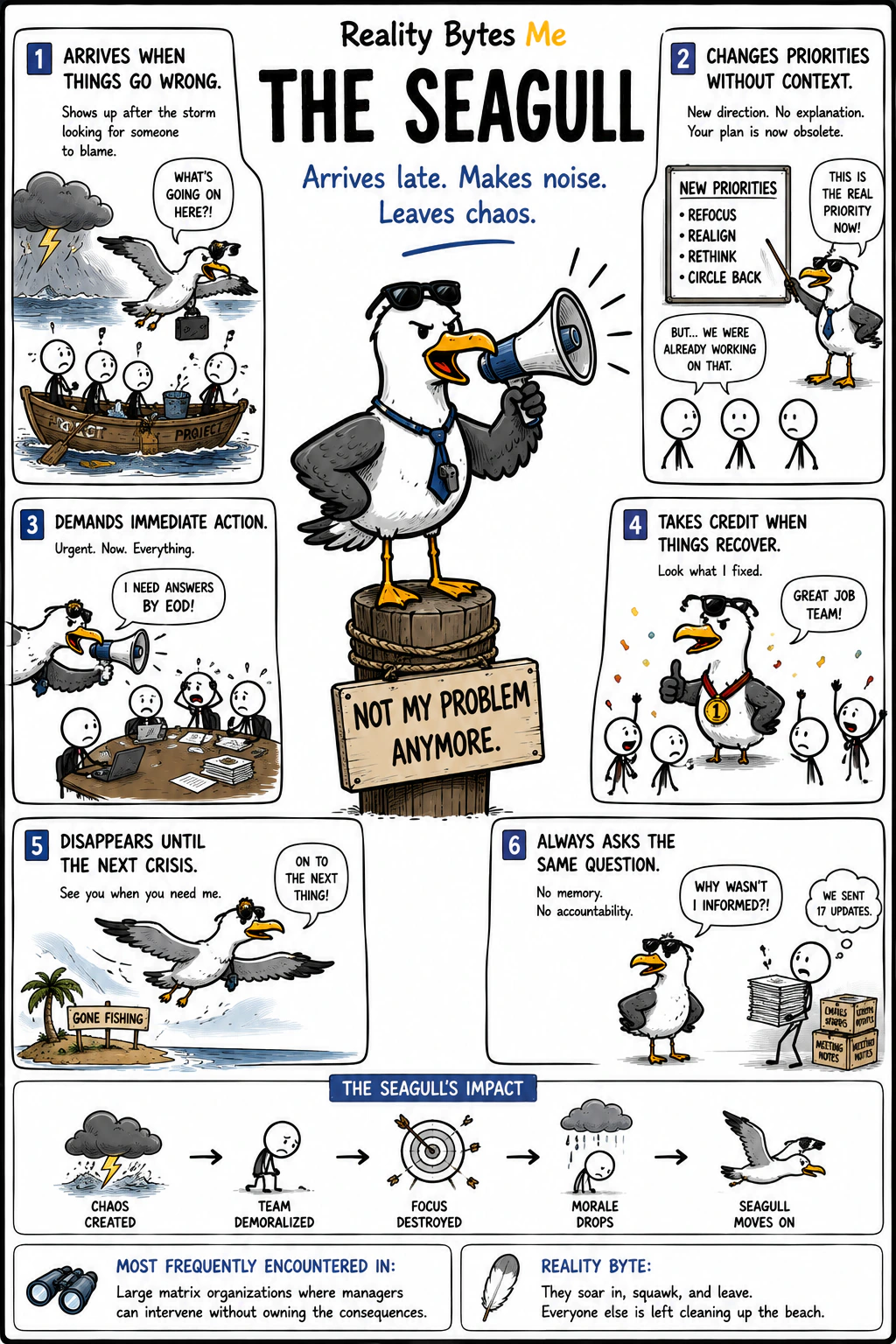
The Seagull wears a tie and sunglasses and carries a megaphone. Around its perch, six scenes trace an intermittent management visit: arriving after trouble begins, changing priorities, demanding immediate answers, accepting credit when things recover and disappearing until the next crisis. The last panel asks why no information was provided while an employee holds a stack of updates. The bird's mobility contrasts with the team, which remains in the boat and must keep working after every visit.
The key issue is discontinuity. An occasional intervention can be valuable when it brings authority, resources or a fresh perspective. This Seagull brings instructions without maintaining the context needed to judge their consequences. The team must absorb the new direction while also continuing work that may already address the supposed priority. The leader's arrival becomes another event to manage alongside the original problem.
The megaphone makes urgency easy to display. It does not distinguish between a question that can be answered immediately and one requiring investigation. When every answer is demanded by the end of the day, the team may spend its recovery time preparing a reassuring account for the visitor. The report becomes urgent because of who asked for it, even if another activity would do more to restore the project.
The credit panel and the departure panel complete the pattern. Success becomes evidence of a decisive intervention, while the work required to implement, repair or reinterpret that intervention remains with others. The next visit can therefore begin with the same surprise as the last. The unread updates represent continuity that existed on the team's side but never became part of the leader's understanding.
A practical reading asks what an intervention leaves behind. Is there a clear decision, a resource commitment and a named person who will remain available for follow-up? Has the leader understood what the team was already doing? Those questions separate useful escalation support from a noisy inspection. The page's closing image of cleanup is apt: a manager can leave the meeting quickly, but the effects of their instructions stay in the room with everyone responsible for delivery.