Published cartoon ·
The Spider
Workplace satire from RealityBytesMe.
Scene and commentary
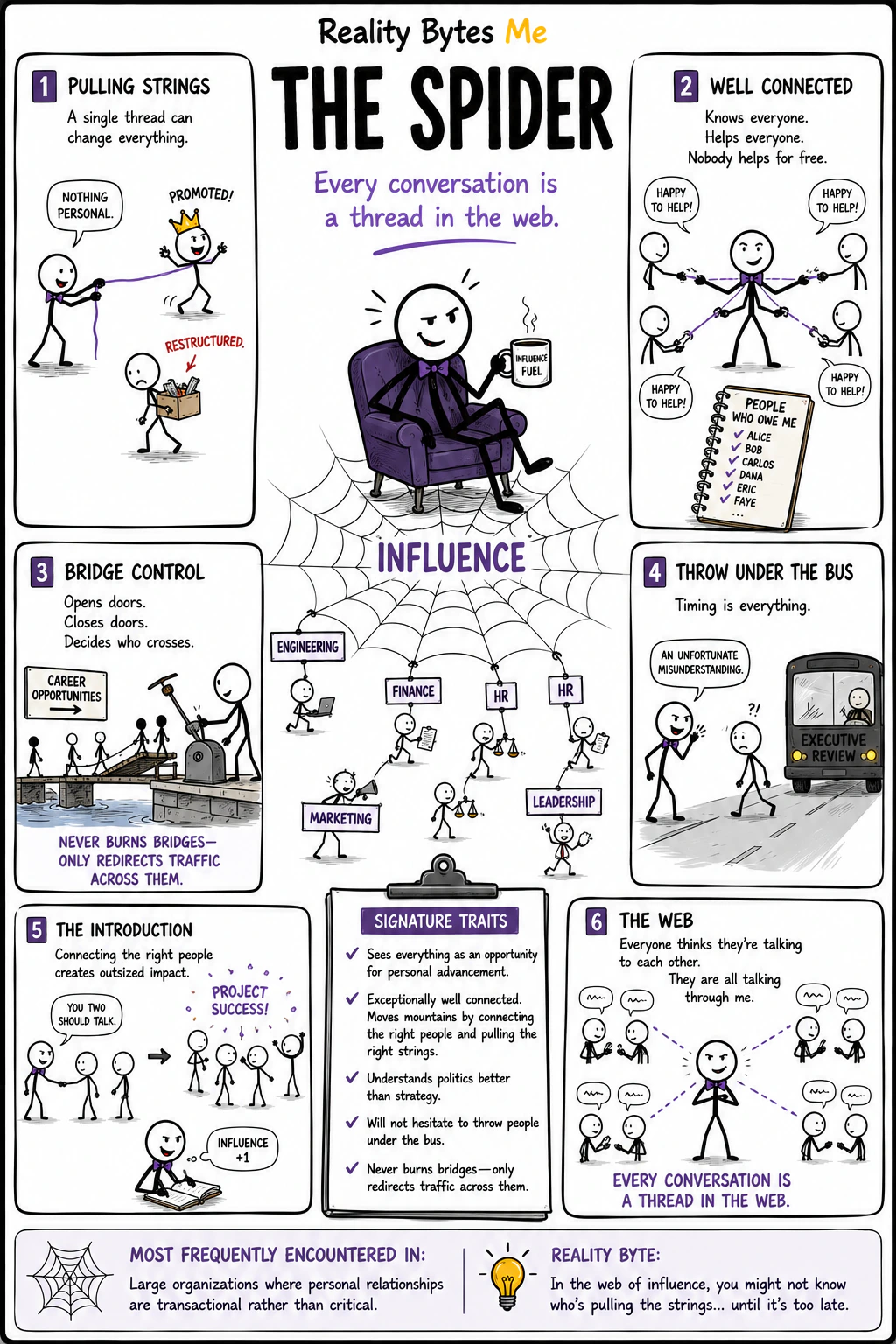
The Spider sits in a purple chair above a web connecting departments and people. A notebook records favours owed, while surrounding scenes show strings influencing promotion, a drawbridge controlling access and an introduction producing a successful project. Another panel turns an executive review into a literal bus. The final scene reveals conversations routed through the same central figure even when participants believe they are speaking directly to one another.
This portrait is deliberately more ambiguous than a simple picture of incompetence. The Spider can connect the right people and help useful work happen. Its power comes partly from real knowledge of relationships and access. The problem is that assistance becomes a private account of debts, and the network is organized around personal advantage rather than a shared ability to collaborate without its owner.
The drawbridge distinguishes connecting people from controlling their connection. A helpful introduction creates a route others can use. A gatekeeper preserves the ability to open or close that route later. Both may look like networking in a report, yet they leave the organization with very different dependencies. The Spider's influence grows when everyone needs it to interpret who can speak to whom.
The executive-review bus supplies the limit of the apparent helpfulness. When association becomes risky, the same network that delivered an opportunity can redirect exposure towards another person. The phrase about an unfortunate misunderstanding makes the move sound accidental. The web metaphor suggests otherwise within the cartoon: timing and position are central to how this character operates, including when support is quietly withdrawn.
A useful reading asks which relationships remain usable without an intermediary. Can colleagues find the decision-maker, understand the criteria and discuss a problem openly? Are contributions recorded in terms of work done rather than favours owed? The answer need not be to eliminate informal relationships; organizations depend on them. It is to prevent essential access and knowledge from becoming one person's private switching system. The web becomes less dangerous when people can see its connections and communicate across them without first becoming another entry in somebody else's notebook.