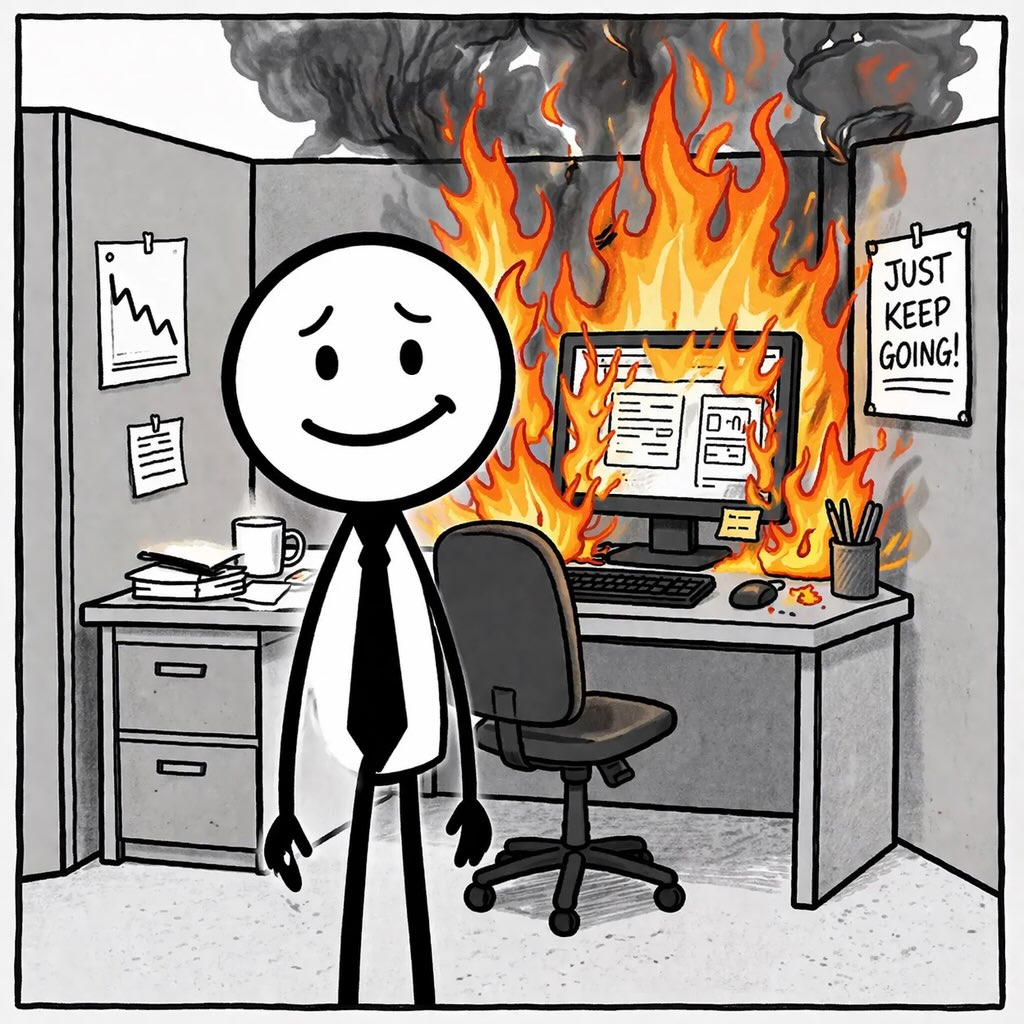
Published cartoon ·
The Chain of Command
Workplace satire from RealityBytesMe.
Scene and commentary
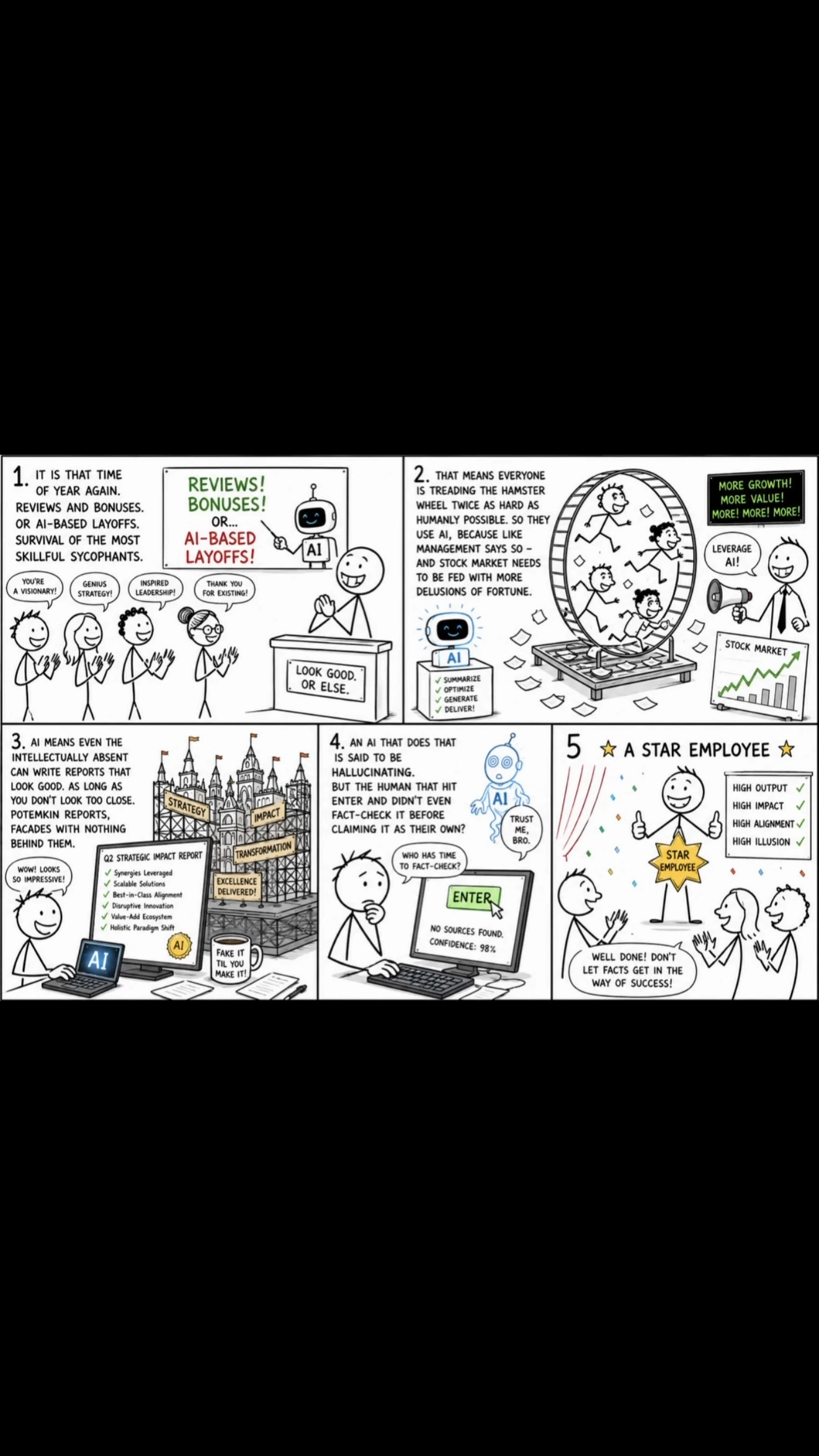
This five-panel office satire follows a review season driven by appearances. Employees praise a leader while a board offers reviews, bonuses or AI-based layoffs. A hamster wheel turns under demands for ever more growth. An elaborate report becomes a castle facade, impressive from the front but visibly supported by scaffolding. Another employee accepts a confident machine-generated answer without checking it, and the sequence ends by celebrating a star employee whose scorecard includes high illusion alongside high output and impact.
The wheel supplies the central movement: everybody is busy, but the image provides no destination. Automation is presented as a way to increase the pace while the underlying demand remains unlimited. Faster production therefore does not settle what is worth producing. It can simply increase the number of reports available to demonstrate that the wheel has been turning.
The castle facade makes a second distinction between presentation and substance. A report can contain the vocabulary of strategy, transformation and excellence without establishing that any of those things happened. Attractive structure helps a reader navigate evidence when evidence exists. It cannot manufacture evidence from confident phrasing. The cartoon lets the viewer see behind the facade while the admirer in front sees only its impressive surface.
The panel about unchecked AI output keeps human responsibility in view. A tool producing an unreliable answer and an employee approving that answer are different events. Blaming the tool alone leaves the approval decision unexplained. The fictional screen's confidence figure is part of the joke, not a verified measure of correctness. A precise-looking percentage can still be decoration if nobody understands how it was obtained.
By the award ceremony, appearance has travelled through the entire chain of command and returned as recognition. Each level accepts the reassurance it wanted from the level below. The satire asks where that chain could be interrupted by a concrete question: which result was observed, which claim was checked and who can explain the work behind the report? Without that interruption, the organization can become extremely efficient at congratulating itself for output it has never properly examined.