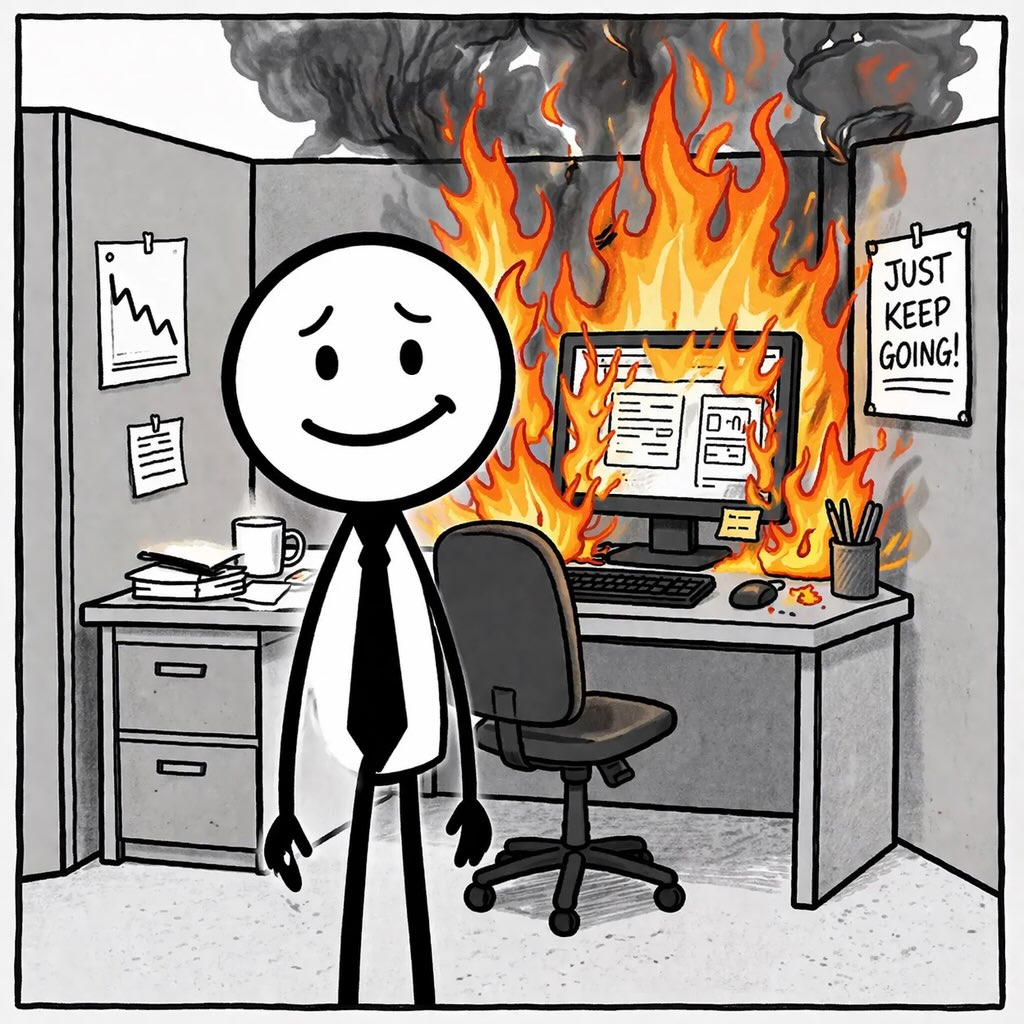
Published cartoon ·
Accountable for All the Work
Accountability reaches its purest form when it claims the work but cannot help perform it.
Why this one bites
Corporate accountability often travels upward while practical responsibility travels downward. One person does the work; another requests status, offers opinions and remains accountable in the organizational chart.
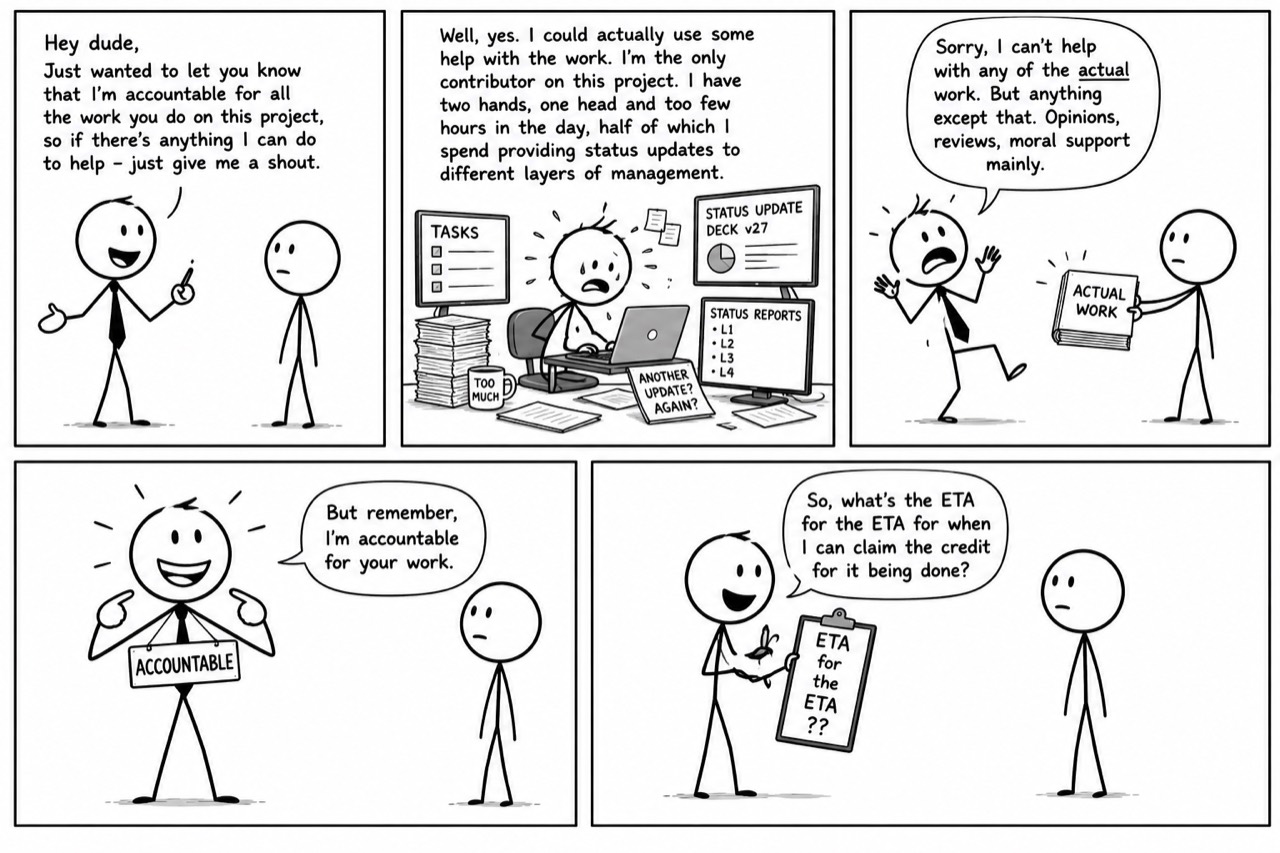
The cartoon separates moral support from useful capacity. Its last question—an ETA for the ETA—turns project reporting into the product and delivery into the inconvenient dependency.
Transcript
- Manager: I'm accountable for all the work you do on this project, so if there's anything I can do to help, just give me a shout.
- Employee: I could actually use help with the work. I'm the only contributor, and half my day is spent providing status updates to different layers of management.
- Manager: Sorry, I can't help with any of the actual work. But anything except that—opinions, reviews and moral support, mainly.
- Manager: But remember, I'm accountable for your work.
- Manager: What's the ETA for the ETA for when I can claim the credit for it being done?
Reading notes
The offer of help is generous only within a carefully protected boundary. Advice, review and encouragement are available; capacity to perform the work is not. Those activities can be valuable, but they become counterproductive when the contributor's immediate shortage is time and the additional support creates more conversations to service. The employee is asking for a second pair of hands and receiving a larger audience instead.
The manager need not personally implement the solution to help. They could consolidate reporting, negotiate a smaller scope, secure another contributor or make a decision that removes a delay. Those are uses of authority that change the working conditions. The cartoon is pointed because the offer excludes precisely that practical change while retaining the claim to accountability and eventual credit. The final ETA request confirms which outcome matters most: not when the employee's burden will reduce, but when the manager can announce that the work is complete.