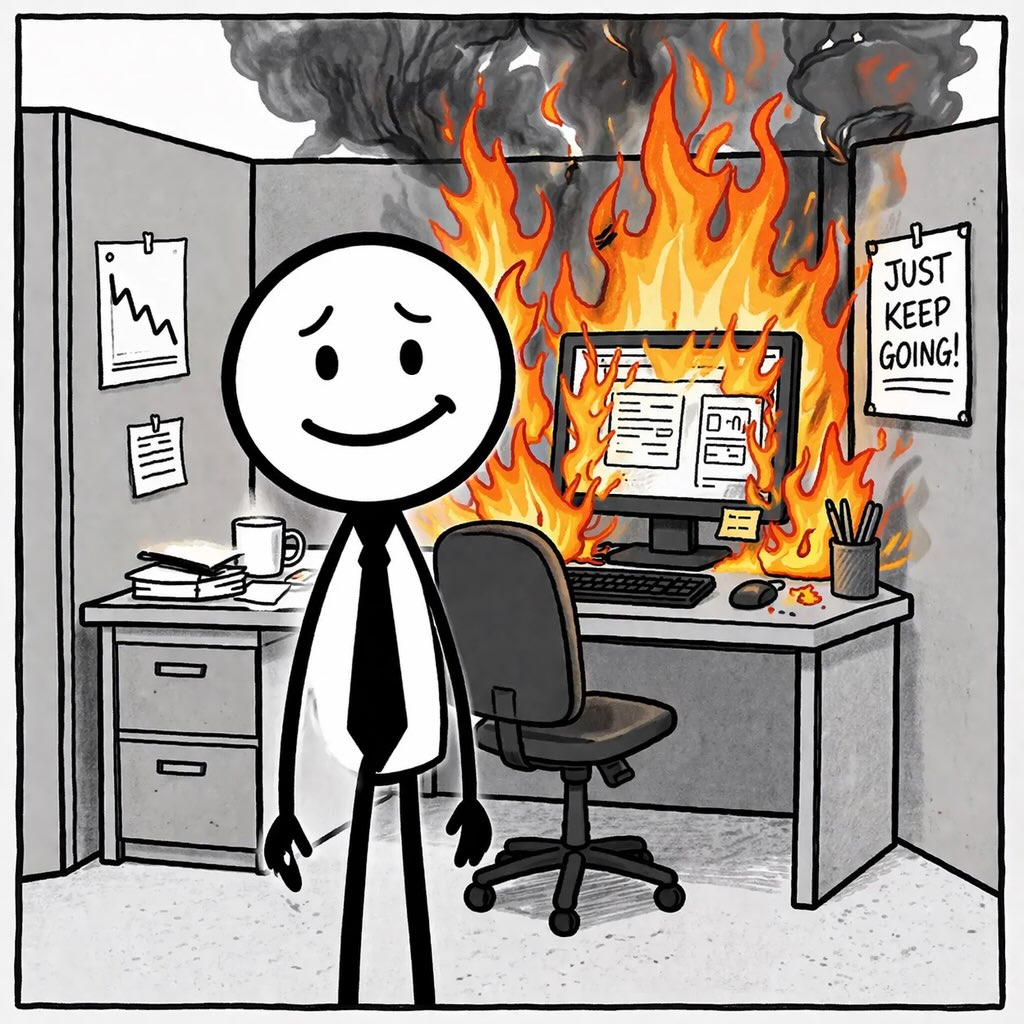
Published cartoon ·
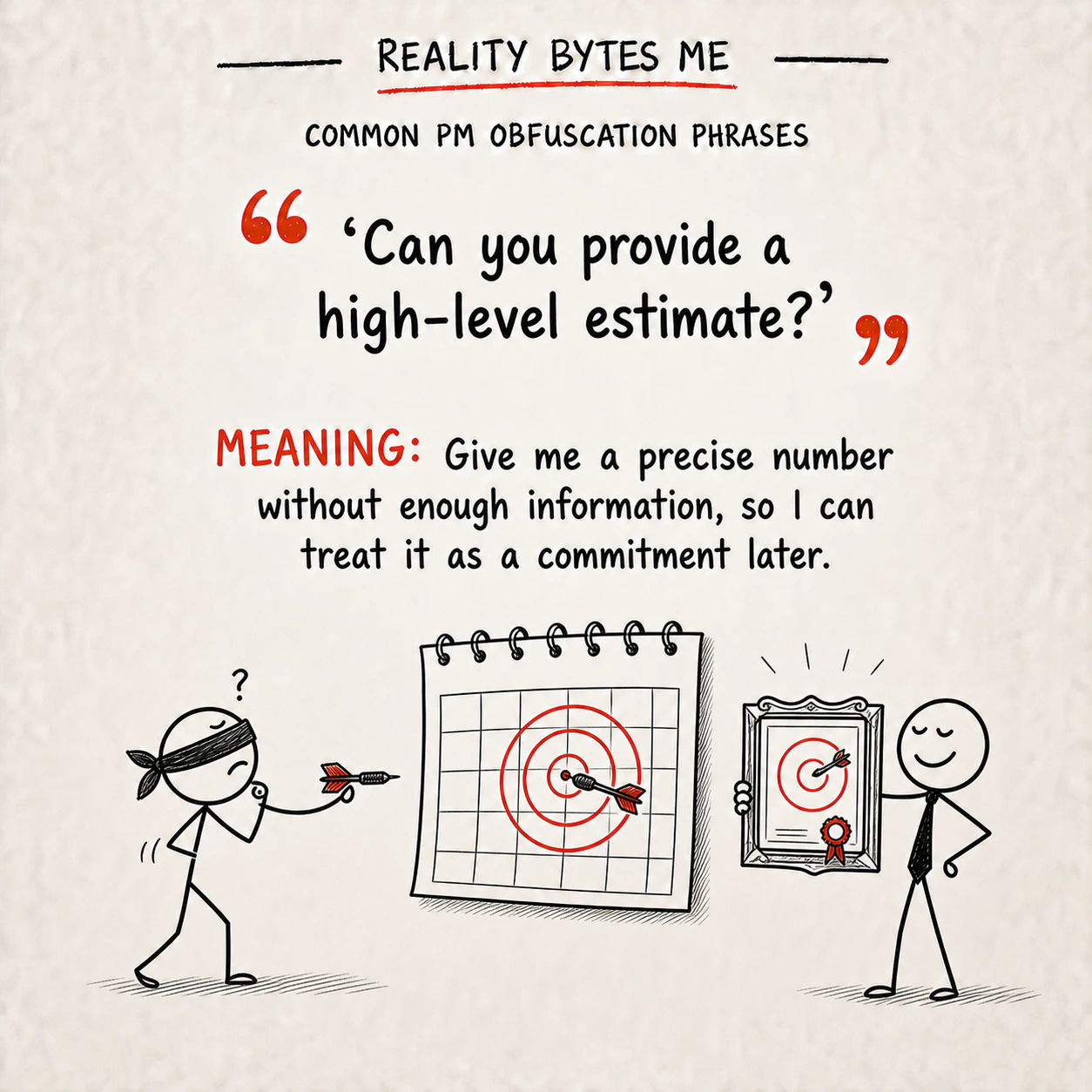
Can you provide a high-level estimate?
Today's rough guess becomes tomorrow's framed commitment.
Why this one bites
The employee is asked for precision while effectively blindfolded. A dart on a calendar then becomes a framed achievement in the manager's hands. The uncertainty that produced the number is absent from the object used to celebrate it.
Early estimates can support planning when their assumptions travel with them. This cartoon follows the moment those qualifications fall away and a provisional answer becomes a promise. The frame gives an improvised prediction the appearance of a settled agreement.
Accessible summary
- A blindfolded person holds a dart beside a calendar with a target. A smiling manager displays a framed target with a dart and a ribbon.
- The caption describes asking for a precise number without enough information, then treating it as a commitment.
Reading notes
An early estimate describes a range of possible work under stated assumptions. It is valuable precisely because a team does not yet know everything. Trouble begins when the number travels further than the assumptions. A rough planning figure enters a slide, becomes a budget boundary and returns to engineering as an agreed delivery commitment. The estimate has changed status without gaining any evidence.
The phrase high-level can disguise that transition. It suggests that detail is unnecessary, but the consequences attached to the answer may be very detailed indeed. Staff are allocated, dates are announced and another team plans its own work around the number. When investigation reveals a different scope, the estimator appears to be changing a promise rather than updating an explicitly uncertain forecast.
A responsible estimate therefore includes what it covers, what it excludes and what would make it move. A range is often more informative than false precision. So is a date for revisiting the estimate after a specific uncertainty has been tested. The cartoon concerns the political life of the number once those qualifications disappear. It asks whether the organization wants a planning aid or a statement it can later use as proof that someone agreed the work was easy.